
The state of play in military space
The military space sector is evolving fast. Get the latest from Space Force and industry officials on what’s next for acquisition, policy and training in a new Breaking Defense eBook.
The military space sector is evolving fast. Get the latest from Space Force and industry officials on what’s next for acquisition, policy and training in a new Breaking Defense eBook.

"Not only are [some Chinese satellites] difficult to visually acquire, that shape, they believe, would be incredibly beneficial in terms of masses of the radar cross section," Chief Master Sergeant Ron Lerch said.


Lithium-metal batteries are one way to break the weight and endurance limits of today’s unmanned systems.

“The design is very low drag, and with two even current WS-10C class engines would likely have significant supercruise capabilities at high altitudes, allowing enhanced range and missile reach,” RUSI's Justin Bronk told Breaking Defense.

"Beijing won't want to waste an opportunity to humiliate the US by operationally deploying a sixth-gen platform before the US," said analyst Malcom Davis. "Look for the J-36 in particular to enter service before the end of this decade."

The radar station on Triton will probably complicate military operations in peace time across the South China Sea but could also prove to be a juicy target in time of war, says Malcom Davis at the Australian Strategic Policy Institute.

Hiding in the sun, launching mini satellites and radar absorbent materials are just some of the tricks nations are using to hide their military satellites in orbit.

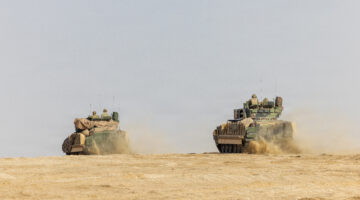
Army vehicles like Bradley need greater power at the sprocket for speed, braking, and manueverability.

The US and China are racing to develop quantum technologies. But each superpower is emphasizing different applications of the same fundamental science, and some American experts think a couple of Beijing’s top priorities may be dead ends.

The Air Force recently confirmed the secretive plane was continuing flight testing out of Edwards Air Force Base.
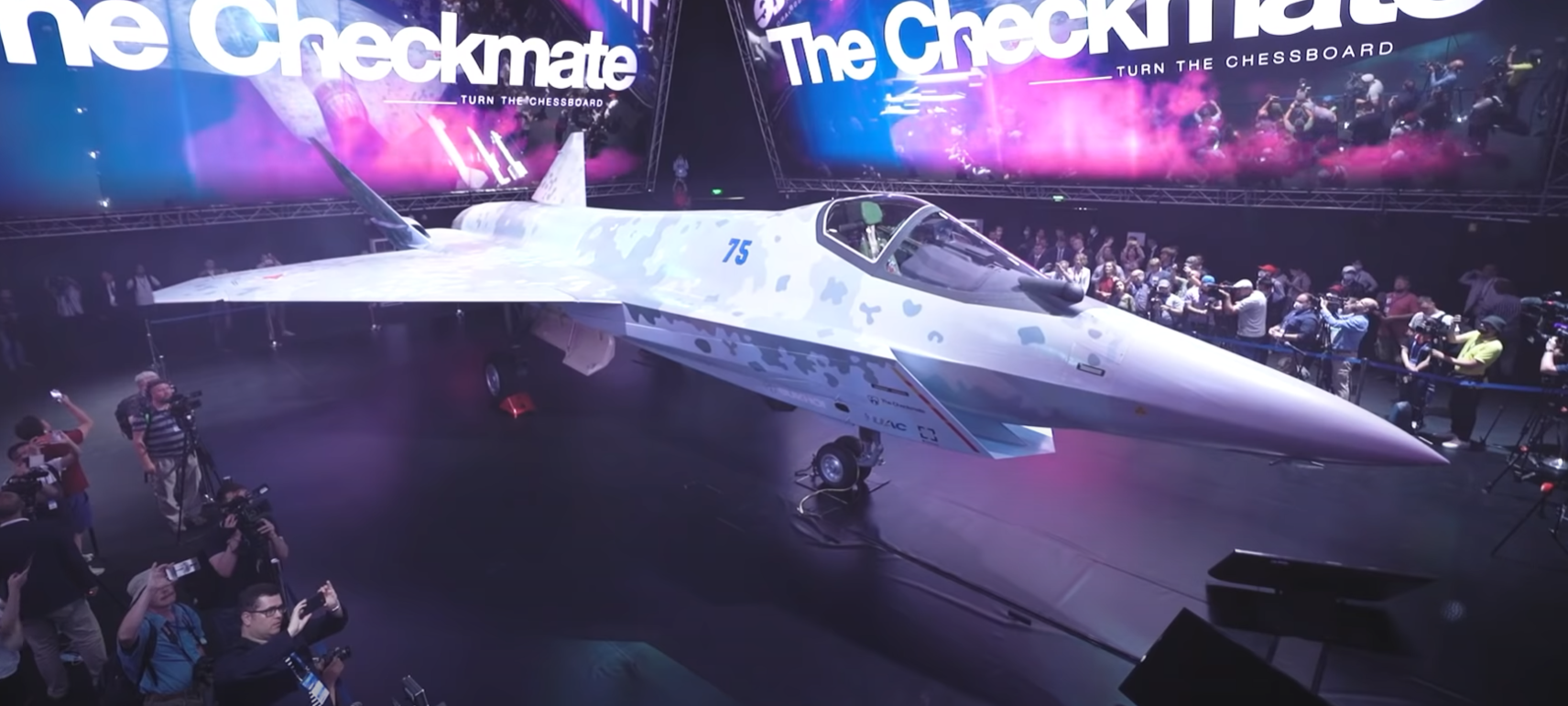
The Su-75 Checkmate, produced by Sukhoi, is marketing itself as a single engine stealth fighter on par, but cheaper, than the F-35.

Rep. Adam Smith, who's excoriated the F-35, said the B-21 bomber is “on time, on budget, and they're making it work in a very intelligent way.”

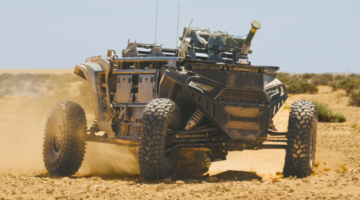
One commander, many robots: Fully autonomous ground vehicles are reshaping the battlefield.

"It doesn’t take a rocket scientist to figure out that if Israel’s the only country in the Middle East that has F-35s, that selling it to someone else no longer produces that qualitative military edge," Sen. Bob Menedez said.

TEL AVIV: After a long internal debate, Israel’s military has decided to buy both another Lockheed Martin F-35 squadron AND another Boeing F-15 squadron, in a deal estimated at $3 billion. The Israeli Defense Forces (IDF) general staff’s decision reflects the scope of missions the IAF will have to deal with in any major confrontation, especially one […]

Next month, the Air Force will start rapid-fire field tests of new network tech, including a long-delayed secure datalink between its two stealth fighters.

Newer A, B and C Variant aircraft are averaging greater than 60 percent mission capable rates, with some units consistently at or above 70 percent.